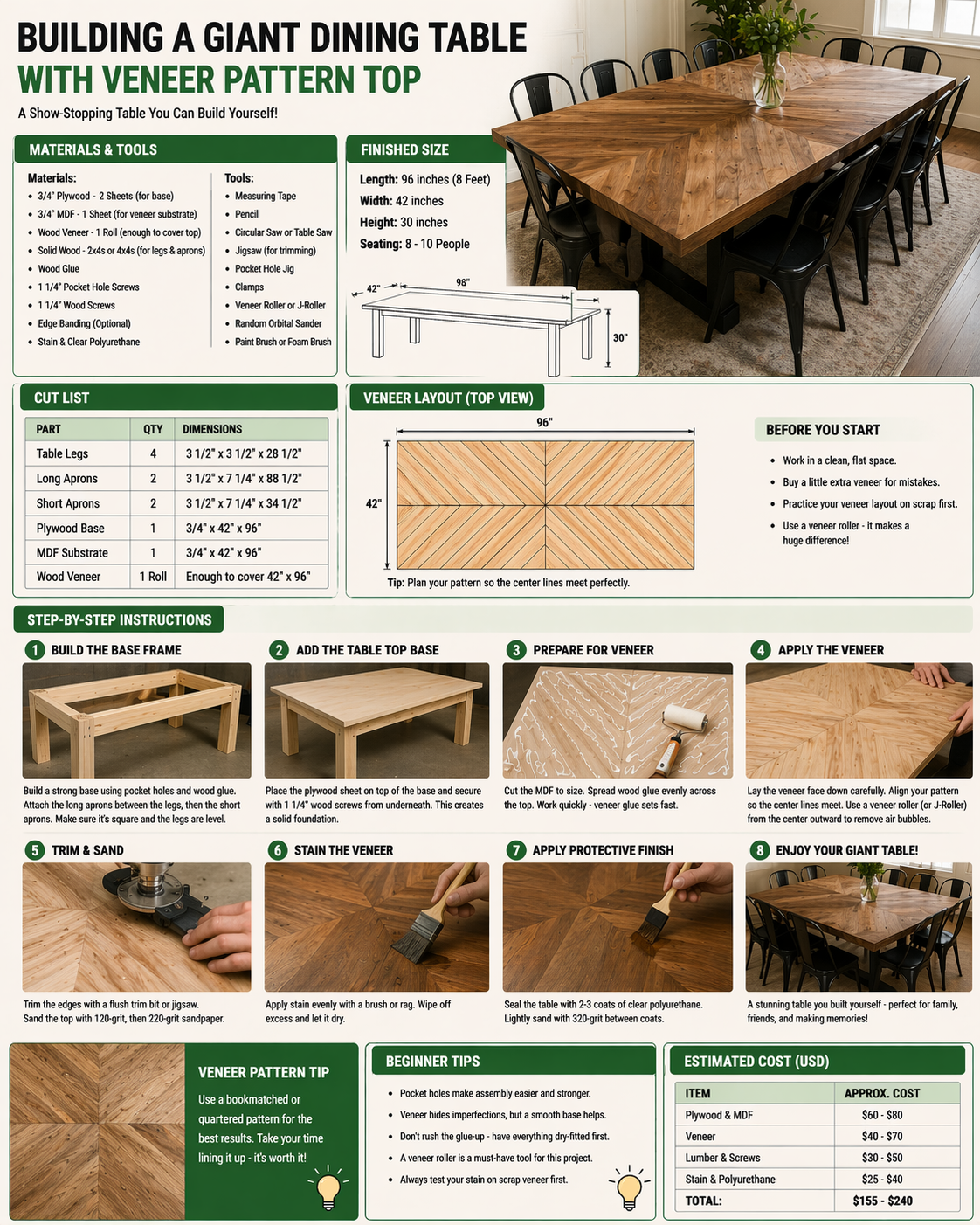
Building a Giant Dining Table: Easy DIY Woodworking Plan for Your Home
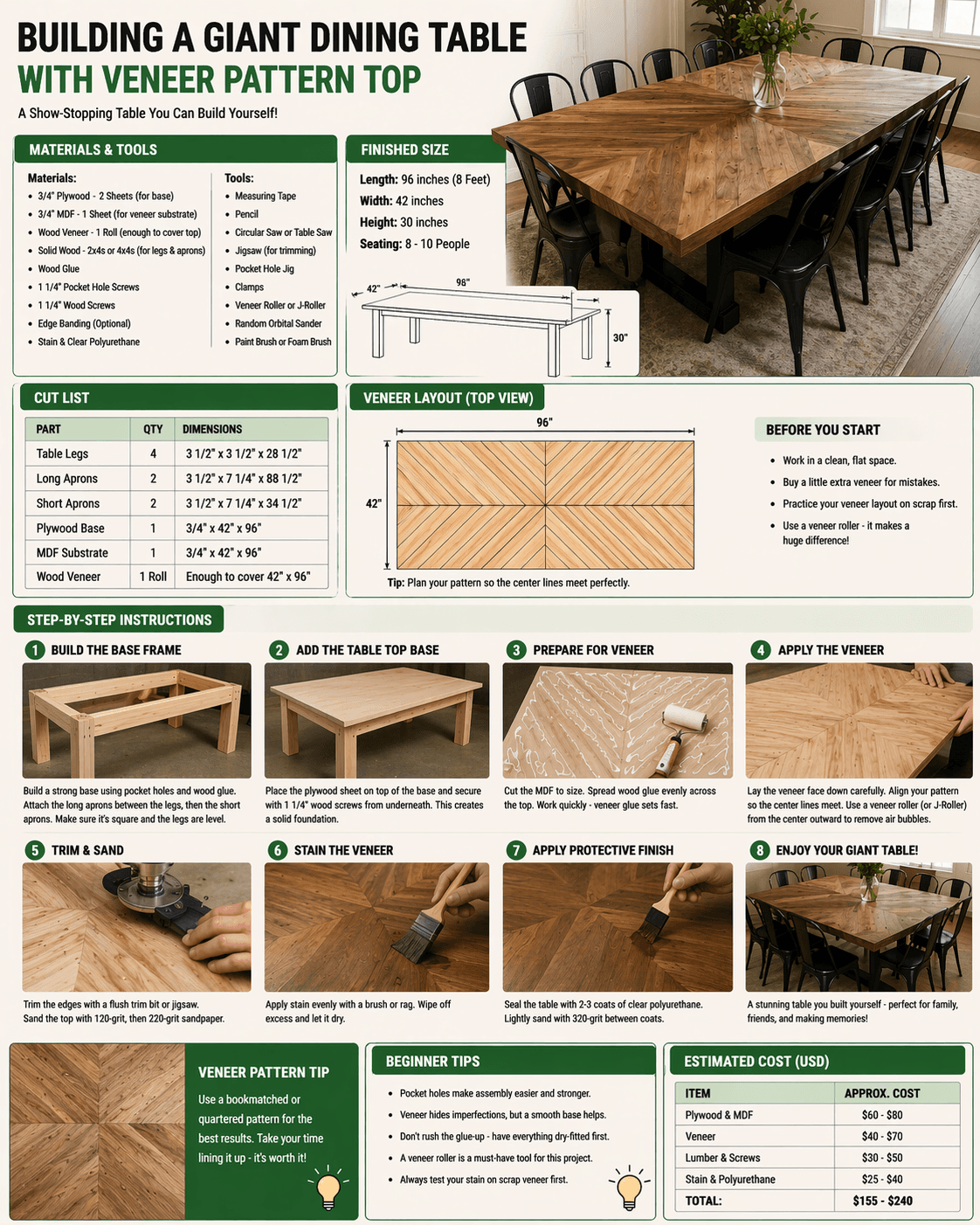
A giant dining table brings family and friends together. This easy DIY woodworking plan helps you build a sturdy, beautiful table without overspending.
A giant dining table is one of the most rewarding woodworking projects you can tackle at home. It becomes the centerpiece of every gathering, every holiday meal, and every quiet morning coffee. The good news is that building a large dining table does not require a professional shop or years of experience. With a clear, easy woodworking plan, basic tools, and affordable lumber, you can create a table that looks custom-made and lasts for decades.
This guide walks you through why a giant dining table plan is worth your time, what makes the project approachable for beginners and intermediate builders alike, and how you can save money compared to buying ready-made furniture. Whether you want a rustic farmhouse look or a clean modern profile, the fundamentals stay the same: solid joinery, a flat top, and legs that will not wobble under daily use.
Why This Easy Woodworking Plan Works for DIY Builders
The best DIY dining table plans break the build into manageable steps. You start with a cut list so you know exactly how much lumber to buy—no wasted trips to the home center and no surprise costs at checkout. Measured drawings show leg placement, apron dimensions, and tabletop overhang so you can visualize the finished piece before making the first cut.
An easy plan also tells you which tools you actually need. For most giant dining table builds, a circular saw or miter saw, drill, pocket-hole jig or doweling kit, clamps, and a sander are enough. You do not need a full cabinet shop. That keeps the project economical and realistic for garage and basement workshops across New York and beyond.
Helpful plans explain grain direction, how to glue up a wide top without bowing, and when to pre-drill to avoid splitting hardwood. Those details turn a frustrating weekend into a smooth build you will be proud to show off on social media.
Materials That Keep the Project Affordable
Pine, poplar, and construction-grade lumber can produce a stunning table when sanded, filled, and finished well. Many DIYers use a hardwood top—oak, maple, or walnut—for durability and pair it with painted or stained base components to balance cost and style. Either approach keeps the total bill far below custom furniture showroom prices.
Hardware is simple: wood screws, wood glue, and optionally table clips or z-clips to allow the top to expand and contract with humidity. A gallon of quality stain or polyurethane completes the look. Because you control every choice, you can build a giant dining table that fits your room, your family size, and your budget.
Building Tips for a Sturdy, Long-Lasting Table
Flatness is everything. Assemble your tabletop on a known-flat surface—a sheet of MDF on sawhorses works well. Clamp boards tightly during glue-up and check for twist with winding sticks or a straightedge. For the base, square the apron corners and keep leg lengths identical so the table sits level on any floor.
Sand progressively from 80-grit through 220-grit before finishing. Round over sharp edges slightly so chairs slide comfortably and the table feels friendly to the touch. Apply finish in thin coats, sanding lightly between them, for a professional sheen that photographs beautifully when you share your build online.
Perfect for Sharing on Facebook and Instagram
Giant dining table projects perform exceptionally well on social media because the transformation is dramatic. Before-and-after photos, time-lapse clips of glue-ups, and close-ups of grain and joinery inspire other DIY woodworkers to start their own builds. Tag your posts with keywords like easy woodworking plan, DIY dining table, and beginner furniture build to reach the right audience.
When you document your process, you also build confidence for your next project—benches, a sideboard, or matching shelves. One successful table often leads to a whole dining room full of handmade pieces.