Wooden Coffee Table Step-by-Step Plan: Easy DIY Woodworking Guide
Build a living room centerpiece with a step-by-step coffee table plan. Easy joinery, helpful tips, and budget-friendly lumber choices.
A wooden coffee table anchors your living room and invites conversation. Building one yourself lets you match height to your sofa, choose stain color to complement flooring, and add features like a lower shelf for baskets or magazines. Step-by-step woodworking plans remove guesswork by ordering tasks from lumber selection through final finish.
Coffee tables sit in the sweet spot for difficulty: larger than a box, smaller than a dining table, with forgiving proportions if leg lengths vary slightly. An easy plan emphasizes repeatable cuts and simple joinery so you finish before the weekend ends.
Step-by-Step Structure That Saves Time
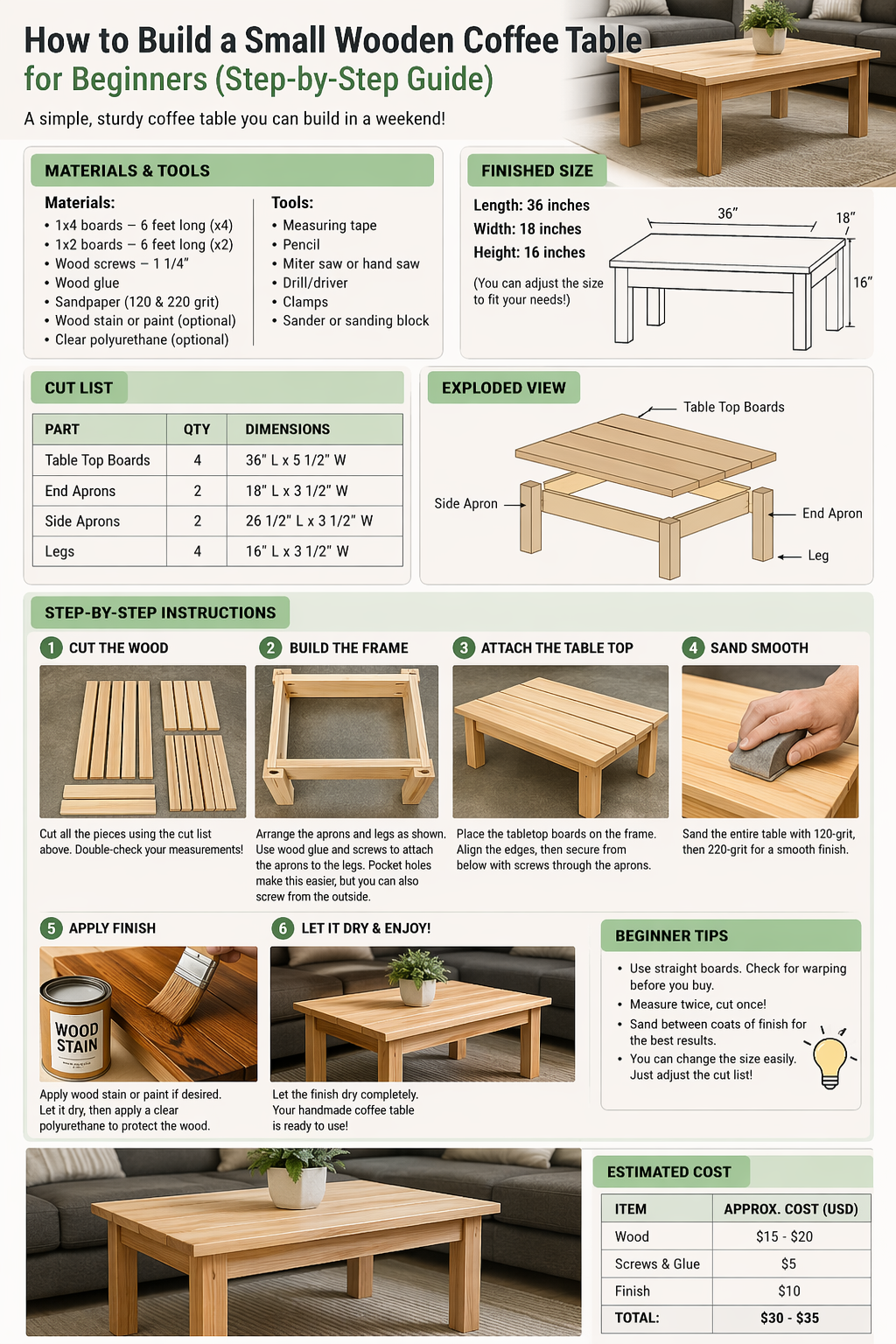
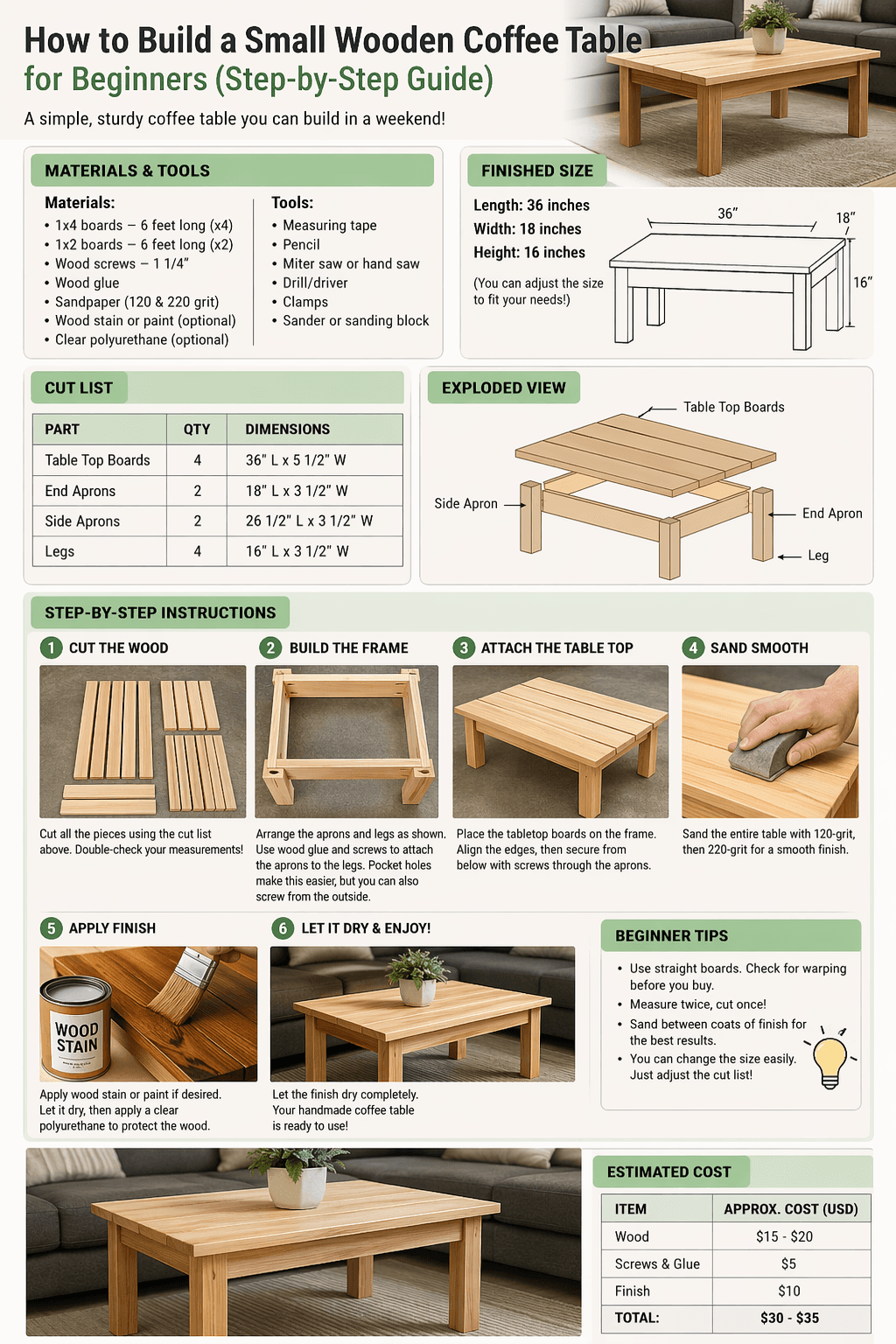
Typical steps include cutting the top panel, milling aprons, attaching legs, adding optional lower shelf, sanding, and finishing. Plans that number each step help you batch work—cut all parts, then drill all pocket holes, then assemble sub-assemblies. That reduces tool changes and keeps momentum high.
Cut lists paired with diagrams show how to nest parts on standard board lengths to minimize waste. For economical builds, many makers use construction lumber for the base and a nicer board for the top, achieving a high-end look at low cost.
Useful Features for Daily Life
Rounded corners protect shins and kids’ heads. A lower shelf corrals remotes and books. Optional casters make moving the table easy for cleaning—just ensure locking wheels for stability. These small design choices turn a basic table into a piece the whole household uses every day.
Height near 16 to 18 inches suits most sofas. Measure your seating before cutting legs so mugs and plates rest comfortably within reach.
Finishing for Durability and Style
Coffee tables endure cups, feet, and occasional spills. Use a durable topcoat—water-based polyurethane or hard wax oil—and coasters until the finish fully cures. Sand the top to 220 grit for a smooth surface that cleans easily.
Two-tone finishes remain popular on social feeds: dark top with light legs, or vice versa. Experiment on scrap before committing to the show surfaces.
Share Your Step-by-Step Journey Online
Document each numbered step in a photo series for Facebook albums or Instagram carousels. Viewers love seeing flat boards become furniture in six to ten frames. Mention that the plan is easy and economical to encourage comments and saves.
Link readers to download additional easy woodworking plans so they can continue their DIY journey beyond the coffee table.